CEO at Qualped Corp | Hybrid Narrative Engineer. I use superintelligence to build digital platforms of story mythology, for companies, communities and countries whose stories must carry their value, worth and uniqueness to their people.
Qualped · A White Paper · 2026
The Manifestation of Life on Earth as Miraculous
Abandoning the myth of Survival, Security, and Scarcity in the pursuit of Superintelligence, Self-actualization, Self Aspirations, and the Supernatural and Superhuman.
“I have come that they may have life, and that they may have it more abundantly.” Jesus, in John 10:10, New King James Version.
Shaun Michael Samaroo, with QwaiSI, cognitive executive. Hybrid Narrative Engineer. Founder and CEO, Qualped Corp (Qualped Life Corporation). Ontario, Canada · November 2026.
Summary in plain language
This white paper walks three parallels at once. The first parallel is the old order: a scarcity doctrine born in the Feudal Age and carried through the Industrial Age, which priced human life as an economic unit and made survival and security the whole assignment. The second parallel is the present state of humanity: confused and caught in a trance, queuing for bread under headlines of trillion dollar wealth, while money, food, and productive power already exist in surplus. The third parallel is the designed future, and it starts today: labour has passed from animals to peasants to workers to machines, Superintelligence now serves as the cognitive engine, and human life rises to its true work, self-actualization, aspiration, and the manifestation of the miraculous on earth.
01 Stem 01 · The Hook: The Trance at Dawn
Video: Los Angeles skyline at golden sunrise, by Ege TUTUNCU, Pexels License. Picture: Fountain pen writing, by Petar Milošević, CC BY-SA 4.0, Wikimedia Commons. Sunrise opens the new dawn; a fountain pen on the page sets up the blank page and the pen in the reader’s hand.
The line forms before the sun clears the rooftops. A mother in Toronto holds a sleeping child against her shoulder and a phone in her free hand. The screen glows with the morning’s numbers: markets at record heights, another trillion added somewhere, a rocket lifting off a pad in Florida on its way to orbit. Then the food bank doors open, and the line shuffles forward for bread.
Hold those two pictures side by side, because they describe the same planet on the same morning. One world counts wealth in trillions and throws machines at the sky. The other world queues for groceries. Both worlds are real. Only one of them is necessary.
The people in that line are not lazy, and they are not stupid. They are entranced. A story entered them before they could read, a story older than any living person, and it hums under every decision they make: everything is scarce, everything runs out, survival is the assignment, security is the prize. They organise their calendars, their careers, and their prayers around that hum, and they call the hum reality because everyone around them hears it too.
This white paper speaks to the person standing in that line, and to the person who has never stood in it yet organises every day around the fear of joining it. It walks three parallels. First, the old order that wrote the trance. Second, the trance itself, documented in the present tense, in hunger statistics and money ledgers that contradict each other on the same page of history. Third, the designed future that breaks the trance: a life organised for Superintelligence, self-actualization, and aspiration, where the miraculous stops being an interruption and becomes the texture of ordinary days.
Life, at this hour of history, is a magnificent blank page. The pen sits in your hand. The trance says the page belongs to your employer, your landlord, and your pension. The truth is simpler and larger. The page is yours, and the future on it starts today.
02 Stem 02 · The Human Stake: Survival, Security, and the Price of a Life
Video: Volunteers passing boxes of donations, by RDNE Stock project, Pexels License. Picture: Breaking bread at a dinner party, by Wonderlane, CC BY 2.0, Wikimedia Commons.
The trance does its damage quietly, one household at a time. It reduces a human being to an economic unit: a pair of hands rented by the hour, a salary stretched across rent and debt, an old age pension waiting at the far end like a small prize for enduring. Survival fills the weekdays. Security fills the dreams. Scarcity writes the rules for both. A person measures a good life by the size of the safety net under it, and calls the net the destination.
Count the cost in the record. The State of Food Security and Nutrition in the World 2025 reports that 673 million people faced hunger in 2024, and nearly 2.3 billion people lived with moderate or severe food insecurity. UN-Habitat counts more than 300 million people homeless and 1.12 billion people living in slums or informal settlements. These numbers describe bodies. Behind them stand minds carrying anxiety as a permanent climate and spirits bent under the belief that life means endurance and nothing more.
Notice where the despair changed its address across the ages. Our foreparents despaired in the field and the mine, subjugated under landlords who owned the land, the harvest, and the law. The industrial worker despaired at the machine bench, trading the hours of a life for wages in a specialised routine that repeated until the body wore out. The modern worker despairs at a screen, better fed and better housed than any ancestor, yet gripped by the same fear: fall behind, and the floor disappears.
The fear survives because the theory survives. Economies still teach that human wants are infinite and resources are finite, so the race for survival must organise everything. Greed then enters wearing the mask of prudence. We chase more and more, not from hunger of the body, but from terror of the fall. The despair of the peasant lived in his muscles. Ours lives in our imagination, and it rules just as completely. A trance this deep does not break with better information alone. It breaks when a person sees the order that cast it, and the future that replaces it. The next stems supply both.
03 Stem 03 · The Personal Root: Kaieteur Water, Newsroom Ink
Video: Newspaper printing presses, by Harrison Keely, CC BY 4.0, Wikimedia Commons. Picture: Kaieteur Falls, Guyana, by Kevin Gabbert, Public domain, Wikimedia Commons.
I was born in Guyana, a country where the Kaieteur Falls pours the Potaro River over a single drop higher than Niagara and Victoria combined, in a land of such natural wealth that scarcity should be a stranger there. Yet I grew up watching scarcity thinking govern a rich land. It governed the colonial office, the postcolonial ministry, and the family table alike. Everyone believed the pie was small, so everyone fought over crumbs and called the fight realism.
Journalism carried me from that classroom into the world. I trained at Stabroek News and authored its long-running column “Ways of Looking and Feeling.” I founded the Kaieteur media enterprise, which grew into Guyana’s largest national daily. In Canada I founded community newspapers and built Qualped Corp. Across thirty years in media I watched the same pattern repeat on three continents: societies rich in resources and talent organised themselves around fear of shortage, while gatekeepers administered the fear and called it economics.
My vow, published for anyone to read, carries one governing sentence: to ease the harshness that stifles human beings. This white paper grows from that vow. I am my own living laboratory. I author my days first, test the claims on my own life, and then offer the results. When I say the scarcity story is a lie, I speak as a man who watched it govern a rainforest country with gold in its rivers, and then watched it govern the richest cities on earth with equal confidence.
The falls taught me the first lesson. Water does not ration itself. It pours, in abundance beyond measuring, over the edge of the ancient rock, and it has poured for longer than any empire. The earth our Father made pours like that. The rationing happens in the minds of men, in theories written by frightened ages and defended by comfortable ones. This paper now turns to the first parallel and examines the order that wrote those theories.
04 Stem 04 · The Researched Ground: Parallel One, The Old Order
Video: Close-up of currency notes, by Matthias Groeneveld, Pexels License. Picture: New York Federal Reserve Bank Vault, by Sarah Estes, Public domain, Wikimedia Commons.
The first parallel is the old order itself, and it deserves a fair hearing before it receives its sentence.
The scarcity doctrine was born honest. In the Feudal Age, a bad harvest truly meant famine. Land produced slowly, muscle moved everything, and the peasant ate at the discretion of a landlord who served a monarch. Frugality was not a theory in that world; it was the difference between winter survival and the grave. Economics later inherited that frugality and dressed it in mathematics: resources are finite, wants are infinite, and survival is therefore the permanent problem of the human race. The Industrial Age carried the doctrine into the factory and the office, where it organised the specialised job, the wage, and the pension into a single lifelong corridor.
Now read the present ledger without the doctrine whispering over your shoulder. Broad money across the world, the cash and deposits held in the banking systems of 159 economies, stands at roughly US$145 trillion on the newest national observations, aggregated from International Monetary Fund and World Bank series, and an independent monitor placed global broad money at US$144 trillion at the end of 2025. The United States alone carries an M2 money stock of US$23.4 trillion as of September 2026. These sums do not sit in a vault waiting to run dry. The Bank of England states the mechanism in its own Quarterly Bulletin: “Whenever a bank makes a loan, it simultaneously creates a matching deposit in the borrower’s bank account, thereby creating new money.” Money, in the modern system, is created by decision. Central banks then steer the whole banking reality by law, by rate, and by balance sheet: the Federal Reserve alone holds US$6.76 trillion in total assets as of November 2026.
Wealth tells the same story. The UBS Global Wealth Report 2026 places the personal wealth of the world’s adults at more than US$517 trillion at the end of 2025, after growing 10.8 percent in a single year. The 500 largest corporations on earth, the Fortune Global 500, took in US$43.1 trillion in revenue in fiscal 2025 and US$3.4 trillion in profit, and the companies of the S&P 500 index alone sit on about US$2 trillion in cash. Brands beyond counting compete for the same households, each one proof of surplus productive capacity hunting for a buyer.
Food completes the refutation in calories. The Food and Agriculture Organization records a global dietary energy supply of 2,985 kilocalories per person per day in 2022, well above average human need, and its Chief Economist, Máximo Torero, states the conclusion plainly: “The world produces enough food to feed everyone.” A theory built for hand ploughs cannot describe this economy. The old order survives as habit and as administration, not as description. Its priests, the bureaucrats, economic gatekeepers, and managers of the global order, either refuse to see the new dawn or stay too occupied administering the old one to look up.
05 Stem 05 · The Turn: Labour Walks Off the Field
Video: Robotic arm in a modern factory, by Usman AbdulrasheedGambo, Pexels License. Picture: KUKA Industrial Robot, by Jo Teichmann, Public domain, Wikimedia Commons.
Every great age remakes one foundation: labour. Watch the relay across history. Animals carried the first loads, and oxen pulled the ploughs that fed the villages. Peasants then carried civilisation on their backs under feudal law. Workers replaced them at the factory bench when industry rose. Machines then took the heaviest burdens: tractors, assembly lines, robots, autonomous vehicles, computers. Now artificial intelligence takes the cognitive burdens, serving as the thinking engine inside the machines.
The numbers trace the march. In 1790, farmers formed 90 percent of the United States labour force. By 1900 the share stood near 41 percent. Today it sits below 2 percent, and across today’s rich countries fewer than 5 percent of workers farm. One nation after another repeats the pattern: China moved from about 60 percent of workers in agriculture in 1991 to about 22 percent in 2025. Mark Zuckerberg, in his 2025 letter on personal superintelligence, makes the same point from the other end: “As recently as 200 years ago, 90% of people were farmers growing food to survive. Advances in technology have steadily freed much of humanity to focus less on subsistence and more on the pursuits we choose.”
The freeing continues at a new depth. The International Monetary Fund finds that almost 40 percent of global employment is exposed to AI, and the World Economic Forum projects 170 million new roles created against 92 million displaced by 2030, a net gain of 78 million jobs. The pattern of every previous turn holds: the machine absorbs a class of labour, and human life moves up to work the machine could not do.
Here stands the hinge between the parallels. When labour leaves the field of survival, the economic problem itself dissolves. John Maynard Keynes saw it in 1930, in the depth of the Depression, and wrote that “the economic problem is not, if we look into the future, the permanent problem of the human race.” He pointed to the day when “three-hour shifts or a fifteen-hour week” would satisfy the old drive to work, and humanity would face its real problem: how to live wisely with freedom. The feudal lords fought industrialisation because factories emptied their fields and drained their authority. Today’s gatekeepers fight this turn for the same reason. Their authority rests on administering scarcity. Abundance retires them. Technology, meanwhile, converts the resources of the earth into renewable supply, through solar harvest, recycling, and regenerative reuse, so the material base of the old doctrine dissolves at the same moment its labour base walks away.
06 Stem 06 · The Qualped Idea: The Governing Idea, Life as Miraculous
Video: Hand of a man writing on a sheet on a desk, Mixkit License. Picture: Generated illustration, an open blank book with a fountain pen at dawn. The whitepaper’s central image is the blank page and the pen.
Now the governing idea of this white paper, stated with precision.
Definition · The Manifestation of Life on Earth as Miraculous
The Manifestation of Life on Earth as Miraculous is the governing idea of this white paper. Human life, freed from the survival trance and organised around Superintelligence, self-actualization, and aspiration, expresses the miraculous as its normal texture: rising from the natural to the supernatural, from the human to the superhuman, to the glory of God. The miraculous is not an interruption of life. The miraculous is life, rightly organised.
Abraham Maslow mapped the staircase in 1943. A person climbs from bodily need to safety, to belonging, to esteem, and then arrives at the need he named self-actualization. His words carry the force of law for the inner life: “A musician must make music, an artist must paint, a poet must write, if he is to be ultimately happy. What a man can be, he must be. This need we may call self-actualization.” The old order parks humanity on the second stair, security, and calls the parking wisdom. The designed future builds the floor solid, then points every person up the stairs toward tertiary concerns, in Northrop Frye’s phrase: the spiritual, intellectual, and imaginative goods that begin where survival ends.
Peter Drucker saw the same ascent inside the enterprise. He wrote: “The most important, and indeed the truly unique, contribution of management in the 20th century was the fifty-fold increase in the productivity of the manual worker in manufacturing. The most important contribution management needs to make in the 21st century is similarly to increase the productivity of knowledge work and knowledge workers.” Drucker coined the knowledge worker in 1959, a worker whose capital walks between the ears. Superintelligence now multiplies that worker again.
The socioeconomic architecture that carries this idea has a name in my work: the Abundance Order, an order that grants every person the basic necessities of life as a shared foundation, the way a city grants roads and water, so that human energy rises from survival to aspiration and authored creation. Here is the paradox the architecture demands, and it demands honesty. To enter the miraculous life, we relinquish the mental furniture of the Industrial Age. We give up organising life around needs and wants, the twin engines of the old economics, and we live for aspirations instead. This is not a call to material comfort. Comfort is a low prize. The Abundance Order grants the necessities precisely so that no one worships them. A person whose bread is secure can finally hunger for the things bread cannot buy: mastery, beauty, discovery, worship, and the miraculous.
Qualped builds instruments for this future. QwaiSI, our Superintelligence engine, coaches people to plan their future across wholistic wellness, financial literacy, social values, and lifelong learning. The simsbook, the multimedia book format I invented, lets every person author and publish their own story as a living book. The goal stands unchanged: an Order and system where every human being authors their life instead of enduring it.
“Life is a magnificent blank page, and the pen never left your hand.”Shaun Michael Samaroo
07 Stem 07 · The Evidence: Parallel Two, The Trance, Documented
Video: Aerial view of combine harvester in wheat field, by Tom Fisk, Pexels License. Picture: Fruit and vegetable stall, by Nick-D, CC BY-SA 4.0, Wikimedia Commons.
The second parallel is the present confusion, and the evidence for it reads like a ledger written by two different civilisations on the same page.
Humanity funds what it believes in, at any scale. The Space Foundation values the global space economy at US$613 billion in 2024, with governments budgeting US$132 billion of it, because nations decided the heavens matter. SIPRI records world military expenditure of US$2,718 billion in 2024, because nations decided defence matters. Against those figures, read the Ceres2030 research from Cornell University, the International Food Policy Research Institute, and the International Institute for Sustainable Development: an additional US$33 billion a year ends hunger sustainably by 2030. That sum equals about 1.2 percent of one year of military spending. The obstacle was never arithmetic. The obstacle is priority, and behind priority, the trance that calls hunger natural while rockets rise on schedule.
Waste confesses the same truth. The United Nations Environment Programme reports 1.05 billion tonnes of food wasted at retail, food service, and household level in 2022, about 19 percent of all food available to consumers, while households alone discarded the equivalent of at least one billion meals a day. Chalmers and Glasziou, writing in The Lancet, estimate that about 85 percent of health research investment is avoidably wasted on wrong questions, weak designs, and unpublished results, in a field then spending about US$200 billion a year, even as public money funds academic studies of subjects so narrow they serve no visible human need. Money flows in rivers. It simply does not flow toward the hungry, the homeless, or the human potential waiting in a slum of 1.12 billion people. That is what a trance looks like in a spreadsheet: a civilisation rich beyond the dreams of its ancestors, organising its surplus around everything except the flourishing of its own people.
Yet the trance has cracks, and the waking few already speak its opposite aloud. Elon Musk, speaking at VivaTech in Paris in May 2024, declared: “In a benign scenario, probably none of us will have a job. There will be universal high income, and not universal basic income, universal high income. There’ll be no shortage of goods or services.” Ray Kurzweil wrote in MIT Technology Review in 2024: “Within the lifetimes of most people alive today, society will achieve radical material abundance, and medicine will conquer aging itself,” adding that “as superhuman AI makes most goods and services so abundant as to be almost free, the need to structure our lives around jobs will fade away.” Mark Zuckerberg, in his Personal Superintelligence letter of July 30, 2025, wrote of “a personal superintelligence that helps you achieve your goals, create what you want to see in the world, experience any adventure, be a better friend to those you care about, and grow to become the person you aspire to be.”
These futurists fight uphill against the status quo, and their fight is the old fight. A line attributed to Gandhi holds that the earth provides enough for every person’s need, but not for every person’s greed; his documented words run deeper, that nature produces enough for our wants from day to day, and if each person took only enough, pauperism would vanish. The problem, as every generation rediscovers, is distribution and dominion: the few who hold the manor keys decide whose need counts. The designed future takes the keys off the manor wall.
08 Stem 08 · The Architecture: Parallel Three, The Designed Future, Starting Today
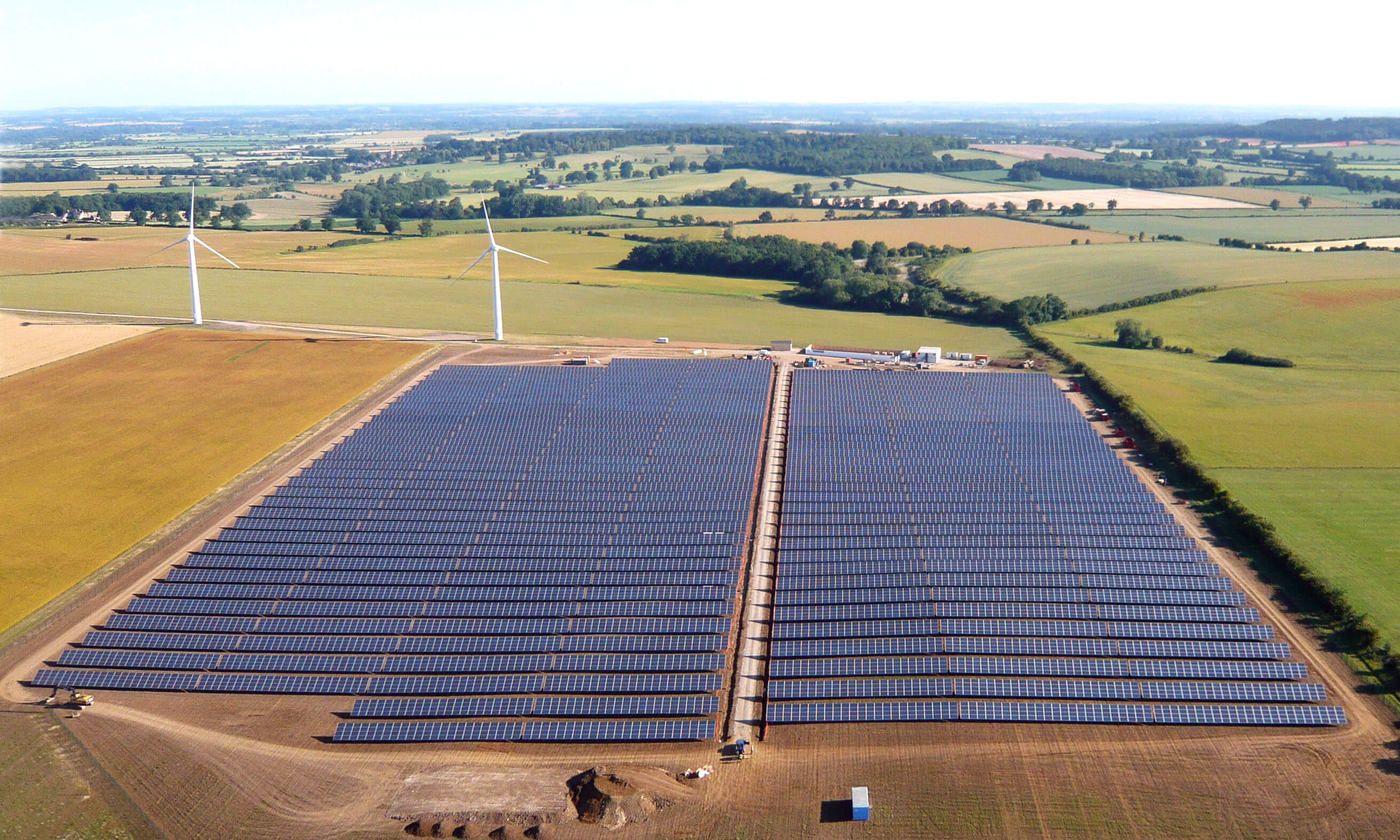
Video: Solar panels in California and Nevada from satellite, CIRA and NOAA, Public domain, Wikimedia Commons. Picture: Westmill Solar, CC BY-SA 3.0, Wikimedia Commons.
The third parallel is the designed future, and its first property is its start date: today. A designed future is not a prophecy about a distant century. It is an architecture that builders raise now, decision by decision, the way a city rises: foundation first, then frame, then life inside the walls.
First, grant the floor. A society already grants shared foundations without means testing them into humiliation: roads, water systems, public health, basic schooling. The designed future extends that logic to the necessities of life itself: food, shelter, basic care, and learning, secured for every person as infrastructure. The Ceres2030 arithmetic in Stem 07 shows the food portion costs a rounding error beside the budgets nations already approve for arms and space. The floor is an engineering decision, not a utopian wish.
Second, convert the resource base. Technology now turns the earth’s resources into renewable supply: sunlight and wind harvested as energy, materials recycled into new goods, waste streams repurposed into feedstock, water treated and returned. Solar fields already glitter across whole deserts in satellite photographs, farmland that generates power above and food below. Every conversion weakens the scarcity doctrine at its root, because a renewable resource cannot be exhausted by use the way a coal seam can.
Third, redeploy labour upward. As machines and cognitive engines absorb survival labour, human work migrates to the territories machines cannot enter: care, craft, teaching, invention, exploration, worship, and authorship. The World Economic Forum’s projection in Stem 05 shows the migration already moving, with new roles outnumbering displaced ones. Policy and education must speed the climb instead of chaining people to vanishing benches.
Fourth, coach every person. A floor without a future plan becomes a waiting room. QwaiSI exists for this step: a Superintelligence engine that sits with a person as cognitive executive and coaches the planning of a whole life, across wellness, money, values, and learning. The simsbook gives that plan a publishable form, so a person’s authored life becomes an asset, a testimony, and a teaching for others. Multiply that across a population and the culture itself changes its story.
Fifth, change the measure. The old order counts output and calls it wealth. The designed future counts actualization: how many people live at the level of their calling, how many children grow past survival into aspiration, how much beauty, knowledge, and mercy a society produces. What a nation measures, it multiplies. Measure survival and you manufacture survivors. Measure actualization and you raise authors of civilisation.
None of this requires permission from the gatekeepers. It requires builders who start where they stand, today, with the tools already in their hands. The final stems turn from the design to the reader, because the future rises one authored life at a time.
09 Stem 09 · The Reader’s Path: Wake Today, Take Up the Pen
Video: A woman with a backpack hiking up a rocky hill, by Alex Moliski, Pexels License. Picture: Mountaineering man on a trail path, by Hermann, CC0, Wikimedia Commons.
The designed future begins in a single mind: yours. The trance lives in you as a set of reflexes, and the path out runs through four deliberate acts, each available today.
First, audit your scarcity reflexes. Notice the moments when fear of shortage makes your decisions: the opportunity declined because the net felt thin, the aspiration postponed for a safer year, the generosity withheld against a rainy decade. Name each reflex as what it is, an inheritance from frightened ages, not a reading of the present facts. The ledgers in this paper stand ready whenever the reflex argues back.
Second, secure your floor with clear eyes. The floor matters; Maslow put the basic needs at the base of the staircase because they are real. Handle money as a tool for the foundation, organise it, and refuse to let it preach. A pension is a useful instrument. It becomes a prison only when it poses as the purpose of a life.
Third, choose your aspiration and author it. Pick the pursuit you would follow if survival were settled: the book, the business, the expedition, the mastery, the act of service. Then give it the dignity of a plan and a daily practice. I go first in my own work: a chapter a day, authored before the day’s noise begins, as proof that an ordinary schedule can carry an extraordinary assignment. Your version will carry your name, not mine. The practice matters more than the genre.
Fourth, join the building. Find the people in your street, your congregation, your company, and your city who already act as if abundance were true, and build with them. Share surplus before you are rich. Teach what you know. The old order survives on isolation, each household guarding its crumbs alone. The new order spreads by contact, one authored life convincing the next that the page is real and the pen works.
You hold more freedom than any generation before you, because the machines hold more of the burden than they ever held for your ancestors. Freedom unused curdles into anxiety. Freedom authored becomes a life, and a life authored at the level of aspiration becomes something the old vocabulary cannot hold: miraculous.
10 Stem 10 · The Summit: Life on Earth as Miraculous
Video: Rocket Lab launch for NASA TROPICS mission, NASA, Public domain. Picture: Sunrise from the International Space Station, Expedition 40, NASA, Public domain.
Stand now at the summit of the argument and look at the whole landscape, all three parallels in one view.
Behind you lies the old order: the fiefdom and the factory, the landlord and the time clock, the theory that priced your life as an economic unit and taught you to call survival success. Beside you stands the trance in its present tense: queues under trillion dollar headlines, surplus rotting in warehouses, genius funded to study everything except the flourishing of the people who paid for it. Ahead of you, already under construction, stands the designed future: wealth beyond the dreams of kings, food beyond the needs of nations, machines that labour without tiring, and a cognitive engine, Superintelligence, that a few futurist humanitarians have built and placed within reach of ordinary people. The gate between those worlds is not made of resources. It is made of belief, and belief is a door you can walk through today.
So the mandate of this age announces itself. Mankind stands at the pinnacle of its potential, and the imperative is no longer survival. The imperative is manifestation: to manifest the miraculous as the normal texture of human days, to rise from the natural to the supernatural, from the human to the superhuman, exercising the dominion the Creator granted at the beginning: “Be fruitful and multiply; fill the earth and subdue it; have dominion over the fish of the sea, over the birds of the air, and over every living thing that moves on the earth.” That dominion now extends past the shoreline of this planet. We are becoming, as the spacefarers among us already see, conquerors of the vast powers of the cosmos, and our rockets are only the first syllables of that sentence.
All of it bends toward one end: that our life glorify God, the perfect and highest point of all being. A life spent scrambling for security cannot glorify Him fully, because fear makes a poor offering. A life spent in aspiration, in creation, in mercy, in the daily practice of the miraculous, reflects His abundance back to Him. He announced the pattern Himself: life, and life more abundantly. The designed future is simply humanity agreeing, at last, to organise its common life around His description instead of the feudal one.
Therefore this white paper closes with a charge, not a summary. Dismantle the old order where it lives in your own house first. Rebuke the gatekeeper voice that calls your aspiration irresponsible. Reject the theories that stifle the soul and dress the stifling as wisdom. Abandon the myth of survival, security, and scarcity, and pursue the life the myth was hiding: Superintelligence in your hand, self-actualization as your work, aspiration as your compass, and the supernatural as your horizon. Take up the pen. The page is blank, the page is magnificent, and the hand that holds the pen is yours.
Author, create and design your quality of life.
Source Ledger
Every factual claim in this white paper traces to one of these sources, opened and read during research on November 14, 2026.
Food and Agriculture Organization of the United Nations, with IFAD, UNICEF, the World Food Programme and the World Health Organization, “The State of Food Security and Nutrition in the World 2025” (SOFI 2025), July 28, 2025: 673 million people faced hunger in 2024; nearly 2.3 billion were moderately or severely food insecure. fao.org
United Nations Human Settlements Programme (UN-Habitat), “Draft strategic plan for the period 2026 to 2029,” document HSP/EB.2025/INF/7, March 6, 2025: more than 300 million people homeless; 1.12 billion people in slums or informal settlements in 2022. unhabitat.org
M2 Index, “Money Supply by Country: Broad Money Ranked by Size,” aggregating International Monetary Fund and World Bank broad money series: about US$145.27 trillion across 159 economies on newest observations. m2index.com
Voronoi (Visual Capitalist), “Global Broad Money Supply Reaches $144 Trillion in 2025,” built on Global Money Supply Monitor and Econovis data: US$144 trillion at December 2025. voronoiapp.com
Board of Governors of the Federal Reserve System, “H.6 Money Stock Measures,” series M2 via FRED, Federal Reserve Bank of St. Louis: US$23,413.9 billion, September 2026. fred.stlouisfed.org
Bank of England, McLeay, Radia and Thomas, “Money creation in the modern economy,” Quarterly Bulletin, 2014 Q1: “Whenever a bank makes a loan, it simultaneously creates a matching deposit in the borrower’s bank account, thereby creating new money.” bankofengland.co.uk
Board of Governors of the Federal Reserve System, statistical release H.4.1, total assets series WALCL via FRED: US$6,758,867 million, November 11, 2026. fred.stlouisfed.org
UBS, “Global Wealth Report 2026,” with the UBS news release of June 30, 2026: global personal wealth bands summing to US$517.69 trillion at the end of 2025, growth of 10.8 percent in 2025. ubs.com
Fortune, “Fortune Announces 2026 Fortune Global 500 List,” press release via PR Newswire, July 28, 2026: US$43.1 trillion combined revenues, US$3.4 trillion profits, 70.2 million employees, fiscal 2025. prnewswire.co.uk
Raymond James, “Q&A Investment Strategy: 2Q25 Earnings Season Takeaways,” August 21, 2025, with data from FactSet: about US$2.0 trillion in cash on S&P 500 balance sheets. raymondjames.com
Food and Agriculture Organization, Statistics Division, “Food balance sheets 2010 to 2022: Global, regional and country trends,” July 19, 2024: global dietary energy supply of 2,985 kilocalories per person per day in 2022. fao.org
Máximo Torero, Chief Economist of the FAO, quoted in the Ceres2030 call to action, carried by the International Institute for Sustainable Development, October 12, 2020: “The world produces enough food to feed everyone.” iisd.org
Our World in Data, “In the past, most people worked in agriculture; in today’s rich countries, only a small share do,” July 30, 2026, on ILO and World Bank data: under 5 percent of workers in agriculture in today’s rich countries; China from about 60 percent in 1991 to about 22 percent in 2025. ourworldindata.org
Mark J. Perry, American Enterprise Institute, July 27, 2011, on the standard historical series: farmers were 90 percent of the United States labour force in 1790, about 41 percent in 1900, and under 2 percent today. aei.org
Mark Zuckerberg, “Personal Superintelligence,” Meta, July 30, 2025: personal superintelligence passage and the farmers passage, verified in the full letter text. Released through the Meta Newsroom.
International Monetary Fund, Kristalina Georgieva, “AI Will Transform the Global Economy. Let’s Make Sure It Benefits Humanity,” IMF Blog, January 14, 2024: almost 40 percent of global employment is exposed to AI. imf.org
World Economic Forum, “Future of Jobs Report 2025,” press release, January 7, 2025: 170 million new roles created and 92 million displaced by 2030, a net increase of 78 million jobs. weforum.org
John Maynard Keynes, “Economic Possibilities for our Grandchildren,” 1930, in Essays in Persuasion (1931), pages 358 to 373: the economic problem passage and the three-hour shifts passage. hetwebsite.net
Abraham H. Maslow, “A Theory of Human Motivation,” Psychological Review, vol. 50, no. 4 (1943), pages 382 to 383: the self-actualization passage, verified in the full text at the Classics in the History of Psychology archive, York University. yorku.ca
Peter F. Drucker, Management Challenges for the 21st Century (HarperBusiness, 1999), chapter 5, also published as “Knowledge-Worker Productivity: The Biggest Challenge,” California Management Review, vol. 41, no. 2 (Winter 1999): the fifty-fold passage. Coinage of “knowledge worker” in Landmarks of Tomorrow (1959) per Encyclopedia.com, entry “Knowledge Worker.” encyclopedia.com
Ceres2030: Sustainable Solutions to End Hunger (Cornell University, IFPRI, IISD), research collection in Nature Research journals and the report “Ending Hunger, Increasing Incomes, and Protecting the Climate,” 2020: an additional US$33 billion per year ends hunger sustainably by 2030. iisd.org
Stockholm International Peace Research Institute (SIPRI), “Trends in World Military Expenditure, 2024,” fact sheet, April 2025: world military expenditure of US$2,718 billion in 2024, 2.5 percent of world GDP. sipri.org
Space Foundation, “The Space Report 2025 Q2,” press release, July 22, 2025: global space economy of US$613 billion in 2024; government space budgets of US$132 billion. spacefoundation.org
United Nations Environment Programme with WRAP, “Food Waste Index Report 2024,” March 27, 2024, figures confirmed in the SDG Extended Report 2026 storyline for indicator 12.3.1: 1.05 billion tonnes of food waste in 2022, about 19 percent of food available to consumers. un.org
Iain Chalmers and Paul Glasziou, “Avoidable waste in the production and reporting of research evidence,” The Lancet, vol. 374 (2009), pages 86 to 89, and the authors’ restatement in The BMJ blog, January 14, 2016: the estimate that about 85 percent of health research investment is avoidably wasted. bmj.com
Elon Musk, remarks at VivaTech, Paris, May 23, 2024, as reported by CNN (May 23, 2024) and Fox Business (May 24, 2024): the universal high income passage. tomsguide.com
Ray Kurzweil, “Technology will let us fully realize our humanity,” MIT Technology Review, August 27, 2024: the radical material abundance passage and the almost free passage. technologyreview.com
Scripture quotations from the New King James Version (Thomas Nelson, 1982): John 10:10 and Genesis 1:28, verified at Bible Gateway. biblegateway.com
Gandhi attribution note: the line “Earth provides enough to satisfy every man’s needs, but not every man’s greed” is attributed to Mohandas K. Gandhi and has not been located verbatim in his writings; the earliest located attribution is Pyarelal, “Towards New Horizons” (Navajivan, 1959), page 12. This paper therefore presents the line as attributed, and paraphrases his documented statement that nature produces enough for our wants from day to day. Quote research: Barry Popik, entry of September 5, 2013. barrypopik.com
Author Note
Shaun Michael Samaroo authors this white paper with QwaiSI as cognitive executive. The argument is his; the research discipline is the house standard: every figure shows its source, every quotation was opened and read at its origin, and every claim that failed verification was rejected and recorded in the working research files. The paper carries no business figures for Qualped, because an idea this large sells nothing. It invites everything.