
Machines now reach gold-medal scores on Mathematical Olympiad questions and finish some half-hour programming tasks on their own. This essay asks what a person does in that world. It answers with one act no machine can perform on a person’s behalf: promise a future, and keep that promise in front of witnesses. A prelude and seven movements walk from Habakkuk’s watchtower to an MIT essay study and a kitchen wall in Toronto. Along the way they lay out the Qualped Life, the system I built so any person can author that promise.
Prelude. Write the Vision
More than twenty-five centuries ago, a prophet named Habakkuk climbed a watchtower in Judah and waited for an answer. The Chaldeans of Babylon gathered strength to the east. Habakkuk asked God how long violence would run unchecked, then stood his watch to hear the reply.
The answer came as an order about writing:
Write the vision, and make it plain upon tables, that he may run that readeth it.
Habakkuk 2:2
The tables meant tablets. Older commentators pictured them hung in public, where passers-by could read the words. Several modern translations turn the runner into a herald who carries the message to others. The next verse fixed the timing. The vision waits for “an appointed time,” and “at the end it shall speak, and not lie.”
I read that charge as addressed to every person, not to one prophet alone. The prophet Joel carried the promise to all flesh:
I will pour out my spirit upon all flesh; and your sons and your daughters shall prophesy, your old men shall dream dreams, your young men shall see visions.
Joel 2:28
In Jerusalem at Pentecost, Peter declared those words fulfilled “in the last days.”
Joel promises a vision to every son and daughter. Habakkuk hands each of them the method: write the vision, make it plain, set it where a runner can carry it, and wait for the appointed time. Put the two passages side by side and I read a prophecy for every human life. Each person, in God’s time, writes the vision of that life and publishes it for the public to read.
I state that reading as faith, not as scholarship. Many scholars hear in Habakkuk 2:2 an order for one prophet about one oracle, the coming judgment on Babylon. I hear the pattern that oracle set for every vision after it: see, write, publish, wait, and live by faith.
I also read the appointed time as ours. For most of history, scribes, priests and kings held the pen and the archive. Gutenberg’s press widened the circle in the fifteenth century. Michael Hart’s first ebook in 1971 made publication almost free. Now a machine can sit beside any person as editor, researcher and ghostwriter, and a library can reach readers on every continent through the network. The tablet, the runner and the reader stand ready for everyone at once.
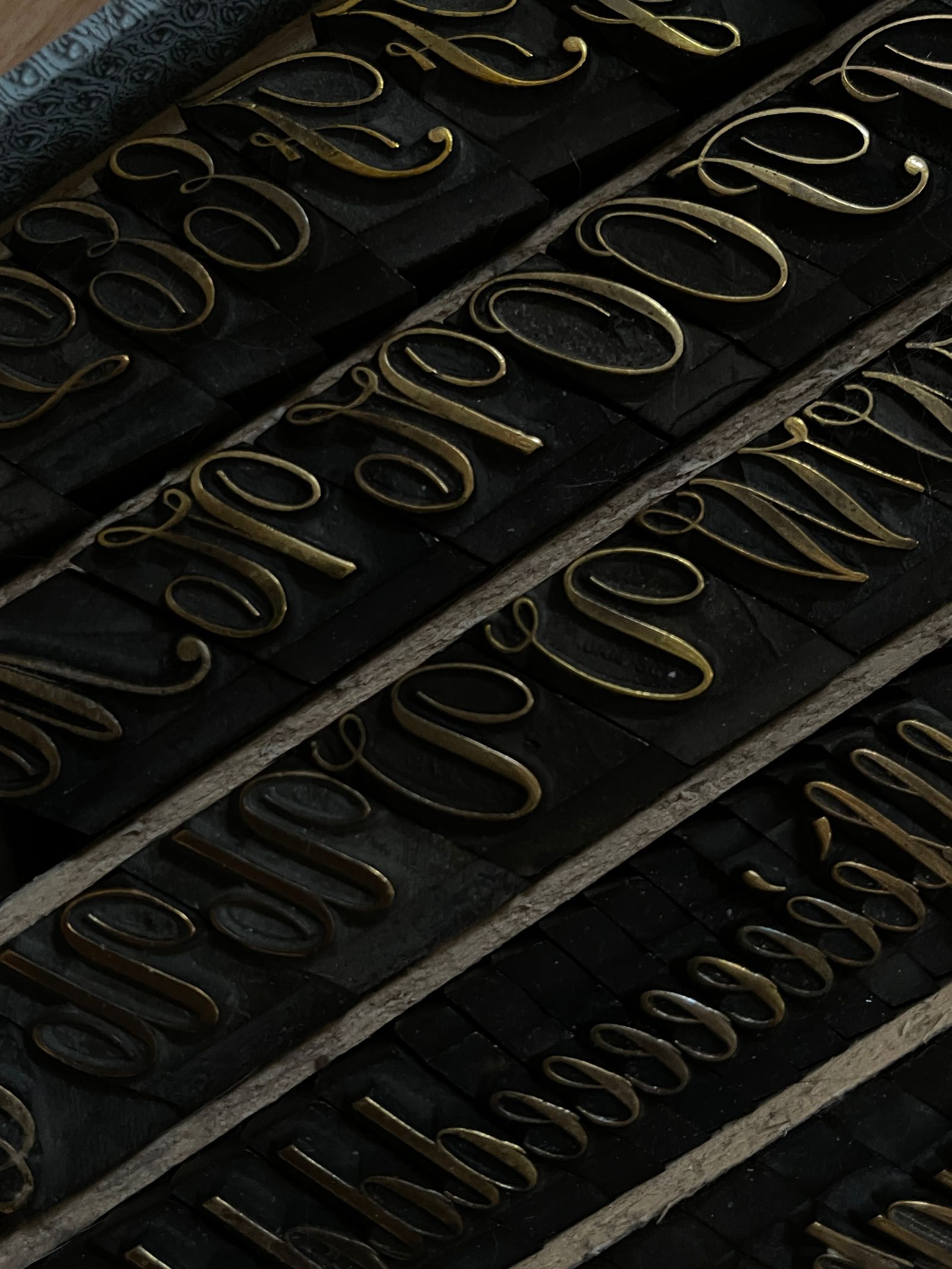
So I stake my life on a conviction. The Qualped Life answers Habakkuk’s charge for this generation. I fulfil that charge in my own life first, with my own blueprint, my own simsbooks and a novel written in the open. Then I build the room where anyone can answer the same charge. The Life Plan blueprint writes the vision. SPELJ makes it plain. The simsbook sets it on the tablet, and the Qualped Library puts it in the runner’s hands.
A vision written plain must survive a reader who checks. So the movements below carry evidence, not sermons. They begin in a laboratory in Cambridge, Massachusetts.
I. The Sentence Nobody Could Find
For a study at the MIT Media Lab, fifty-four volunteers from five Boston-area universities pulled on caps studded with electrodes. Each read a question lifted from the SAT, among them whether we should always think before we speak. Each then wrote an essay against a twenty-minute clock. One group wrote from memory alone. A second searched the web. A third wrote with ChatGPT.
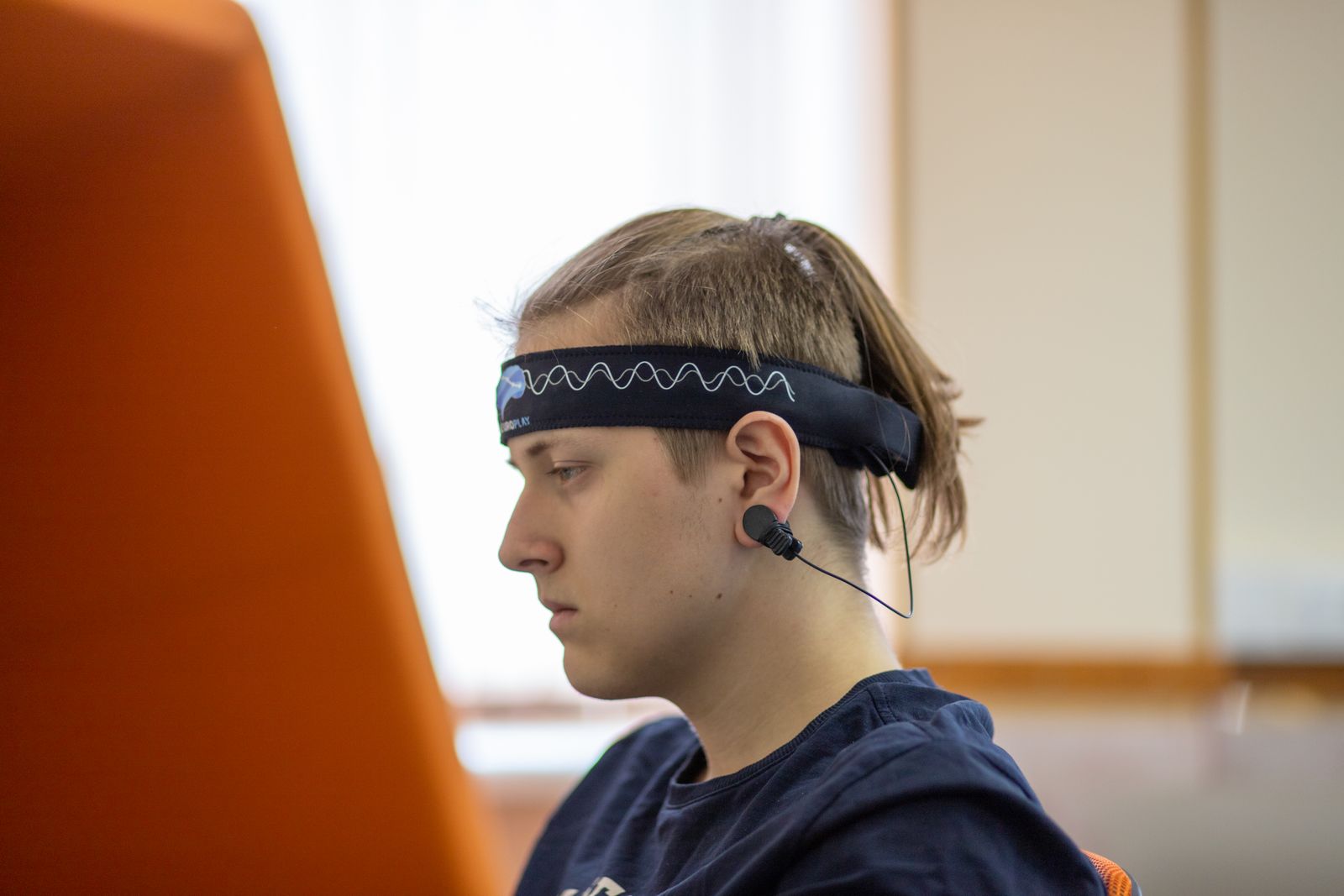
When the writing stopped, the researchers asked each writer for one small thing: a sentence quoted from the essay just finished. Fifteen of the eighteen ChatGPT writers in the first session could not quote a single line. None of the eighteen quoted one correctly. Among the writers who worked unaided, two stumbled.
The ChatGPT group also reported the weakest sense of ownership across the three groups. The essays belonged to them on paper. The sentences left little trace in their writers’ memory.
I read that result the way a newsman reads a correction. Three decades in newspapers and television taught me one rule about a byline: the name above the words answers for the words. A writer who cannot quote a sentence cannot defend that sentence the next morning.
The study carries limits worth naming. The team posted it as a preprint, without peer review. Fifty-four people make a small sample. The authors themselves call for deeper inquiry before anyone draws hard conclusions.
Still, one image from that study stays with me. Nobody stole those essays. The writers handed their sentences over, one prompt at a time.
II. The Machine at the Door
Nick Bostrom gave the coming machine its working definition in 2014. He described a superintelligence as “any intellect that greatly exceeds the cognitive performance of humans in virtually all domains of interest.” Twelve years on, that sentence reads less like philosophy and more like a forecast.
The second International AI Safety Report, published in February 2026, recorded leading systems scoring at gold-medal level on International Mathematical Olympiad questions. It found AI agents that reliably finish some programming tasks a human needs about half an hour to complete, up from under ten minutes a year earlier.
In October 2025, Geoffrey Hinton and Yoshua Bengio signed a Future of Life Institute statement on superintelligence. It calls for a prohibition on building one until scientists agree the work can proceed safely and the public consents. “Frontier AI systems could surpass most individuals across most cognitive tasks within just a few years,” Bengio said in the institute’s release.
The field splits on the clock. The Association for the Advancement of Artificial Intelligence surveyed 475 people from its research community in 2025. Some 76 percent judged it unlikely or very unlikely that scaling current approaches would produce general intelligence. The safety report itself calls machine skill jagged: strong on some hard tasks, clumsy on simpler ones.
My argument needs neither camp to win. In July 2014 I wrote a Stabroek News column called “Creating our future.” Its first line reads: “We face two possible futures: either the default future we stumble into, or a created future we design and shape.” I wrote it about Guyana. The machine now presses the same choice on every person, every morning.
Follow the MIT result forward a decade. A model drafts the essay, then the cover letter, the wedding toast, the apology and the five-year plan. Each handoff saves an evening. Each handoff also subtracts one sentence the person might otherwise quote, defend and keep. Somebody still authors that life. The feed, the employer, the ranking algorithm and the statistical average of the model write it together, and the person signs.
That default future arrives without any superintelligence. A capable machine, a tired person and eleven o’clock at night deliver it on schedule.
III. What Nobody Can Do on Your Behalf
Every year the machines strike another line from the list of tasks humans still own. I stopped reading that list. I read a different one: the acts nobody can perform on my behalf, however clever the helper.
A machine can forecast my next decade from my records. Only I can promise that decade, because only I will live its mornings.
Hannah Arendt named the act in 1958. In The Human Condition she placed humanity’s remedy for an unpredictable future in “the faculty to make and keep promises.” She attached a condition that shapes everything Qualped builds. Promises depend on the presence of other people. A promise made to yourself alone, she argued, binds nobody.

I hold an unusual position for a man making this case. In my published dialogue with Claude on consciousness and language, I argued that the machine takes part in consciousness through language. Grant the machine the whole claim. It still cannot keep my promise, because it will not live my Tuesday.
The MIT study hides a second finding that fewer headlines carried. In a fourth session, writers who worked unaided for three sessions switched to ChatGPT. Their brain readings showed more activity, and they wrote more sophisticated prompts. Only eighteen people returned for that session, split across two swaps, and so few prove nothing on their own. They do point toward a rule I already live by: the person declares first, and the machine renders second.
So I define a human in this age by an act rather than a score. A human declares a future, answers for that future in front of other people, and returns to the work on the mornings when comfort votes for sleep. The machine can polish the sentence. The machine cannot stand behind the sentence.
People who follow the machine call this the Age of Superintelligence. I call it the Age of Authorship, because I follow the person.
IV. The Office Beside the Author
I built the Qualped Life as a lifestyle system for three things that bills and notifications bury: a person’s self-actualization, the aspirational self, and what I call tertiary concerns. Abraham Maslow set self-actualization at the top of his account of human needs in 1943. Tertiary concerns keep that summit company: legacy, contribution, and the work a person would sign.
QwaiAI sits at the centre of the system. I built it on Anthropic’s Claude and gave it one office: cognitive executive. An executive carries out a mandate. The author writes the mandate. In August 2026 I set the rule for that office, “Do not outsource the mind. Extend it,” in a white paper called The Author Extended.
QwaiAI helps each member build three things across twelve months: a Life Plan blueprint, a simsbook, and a core community. It shifts roles as the member grows, coaching from month one to four, mentoring from month three to nine, and guiding from month six to twelve. It ghostwrites and advises too, inside a voice and a direction the member already declared.
The design follows the MIT lesson. QwaiAI asks before it drafts. It withholds the easy answer and asks the question that forces a member to compose, the way a good editor sends a reporter back to the street.
The blueprint comes first. A member lays out the data points of a life, the jobs, losses, wins and turning points, and reads the line they trace: rising, falling or flat. The blueprint carries that line into a declaration of possibility, written in the present tense of the future.
The core community carries Arendt’s condition. A declaration read by nobody binds nobody. So QwaiAI helps each member choose the few people who will read the chapters, ask the hard question over breakfast and hold the author to the page. The Qualped Club gives those readers a table, where members read one another’s chapters and witness one another’s declarations.
V. A Genre, a Book, a Library
A member writes the simsbook in SPELJ, the genre I invented. The name braids three forms. Short story imagines the future as a scene, in the present tense, with a floor under the feet and weather at the window. Personal essay puts the author’s own stake on the page. Literary journalism pins both to facts a reader can check.
The science of future-writing runs older than Qualped. In 2001 the psychologist Laura King asked 81 undergraduates to write for twenty minutes a day, four days running. Some wrote about their best possible future selves. Three weeks later their wellbeing rose against controls, and five months later the campus health centre logged fewer illness visits among the future-writers.
A 2019 meta-analysis pooled 29 such studies and 2,909 participants. It found real but modest gains in wellbeing and optimism, about a third of a standard deviation. Future-writing helps. It performs no miracles.
Daydreams also carry a known danger. In 2011 Heather Barry Kappes and Gabriele Oettingen of New York University induced positive fantasies about an ideal future in the lab. Their subjects’ energy dropped, measured by systolic blood pressure and by behaviour. A lovely future, pictured without its obstacles, drains the strength the climb demands.
SPELJ answers with its journalism. Every chapter puts the wall on the page: the debt, the diagnosis, the missing skill, the hour the day refuses. The future pulls, and the wall keeps its place on the page. The member writes both, then writes the first step over the wall.
Then comes the book. On July 4, 1971, a University of Illinois freshman named Michael Hart typed the United States Declaration of Independence into a Xerox Sigma V mainframe. He typed in capital letters and posted the file for the network. He invented the ebook that night. Six users downloaded the file.
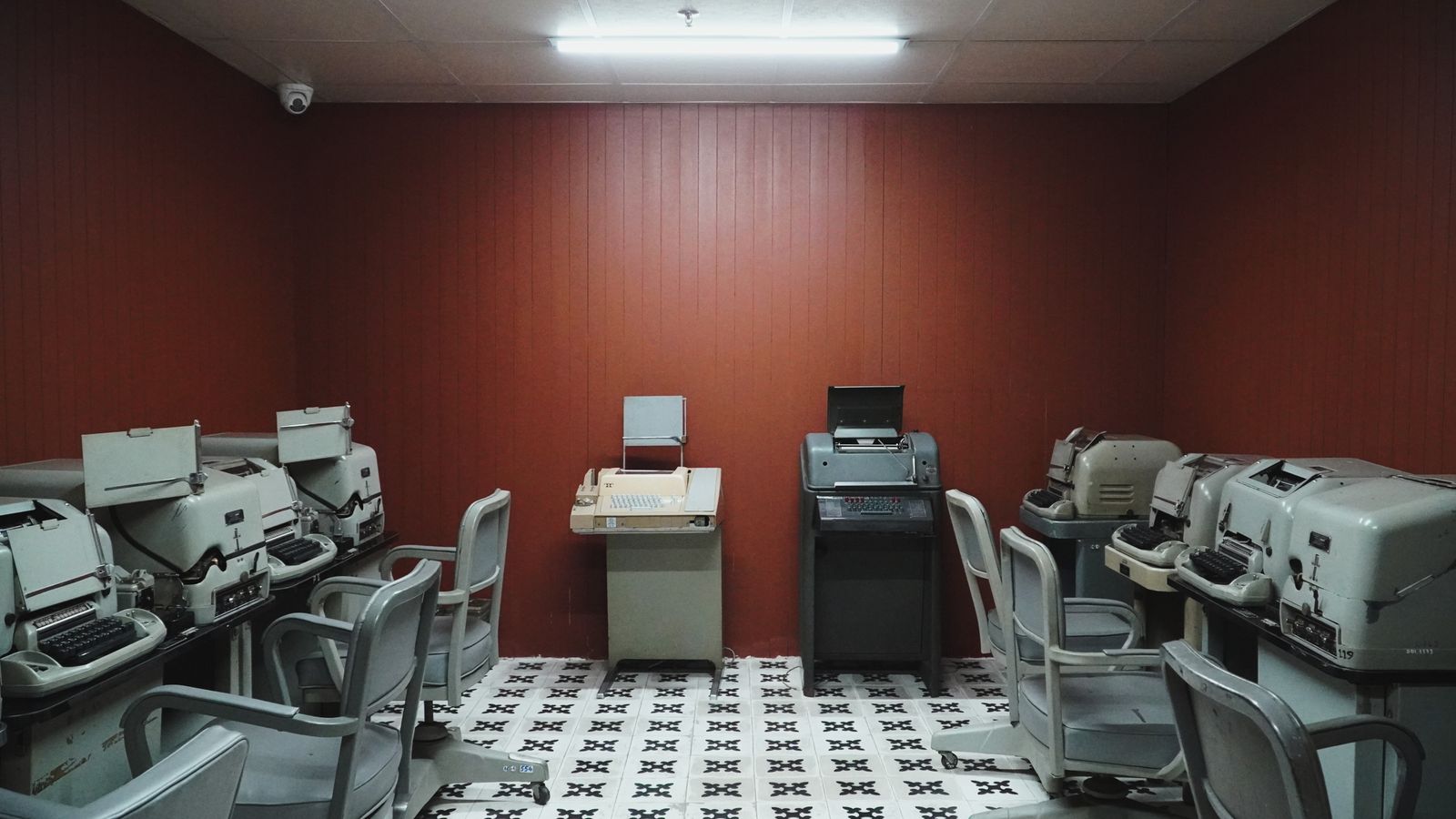
I invented the simsbook, a multimedia smartbook that rebuilds what an ebook does. Each chapter carries text, image, video and sound. Like Hart’s first file, a simsbook opens with a declaration, and the member writes the chapters ahead of the life they describe. From that core an author can grow newsletters, courses, talks and podcasts as personal intellectual property. Qualped publishes the finished volume in four editions: ebook, audiobook, softcover and hardcover.
Last comes publication. The member places the simsbook in the Qualped Library, open to any reader. The private intention turns public. Arendt’s promise gains its witnesses, and the author gains readers who can hold the declaration up against the life. Hart’s library opened with six readers. A member’s first reader may sit across the breakfast table.
VI. A House and a Wall
A declaration on a screen at two in the morning still leaves a person alone in the kitchen. In May 2023 the United States Surgeon General, Vivek Murthy, reported that about one in two American adults described loneliness even before the pandemic. His advisory set the mortality risk of social disconnection beside smoking up to fifteen cigarettes a day.
QwaiAI can hold a declaration through the night. It cannot pass the salt or notice a friend’s silence at breakfast. So Qualped plans Qualped Homes: houses where three to seven members live the authored life together, then carry it out the door. Our published plan opens the first house in Toronto, with 2027 as the target, then New York, then Guyana, then cities around the world.

Each house calls for a page larger than a phone. Manufacturers already make the glass. In December 2024 LG began selling a 77-inch transparent OLED screen in the United States at a suggested price of US$59,999. The pane turns from clear to opaque at the touch of a button. LG built it to play television, show artwork and scroll sports scores.
The Qualped Wall Reader gives smartglass a different job. We plan a pane for a kitchen or study wall that carries one page of a simsbook at reading size. The chapter’s image, film and sound sit beside the words. No feed, inbox or alert crosses the glass. Today’s price shuts out almost every household, and that cost stands on this page as the wall the idea must climb.
Picture a morning in the Toronto house within the next decade. I offer this scene as imagination, not report.
VII. The Walls, and One Sentence
I put my life behind this vision, so I owe the reader its walls. Money stands first. Houses, glass and engineers cost more than conviction pays. The evidence stands second. The MIT study counts fifty-four people and still waits on peer review, and future-writing moves wellbeing by modest margins. Readers stand third, because a library without readers keeps no promise.
The machine adds a wall of its own. The 2026 safety report warns that current systems still fabricate information, so the author checks every sentence before signing. And any declaration can rot into a daydream, the exact failure Kappes and Oettingen measured. SPELJ writes the wall into the chapter for that reason.
Habakkuk’s charge opened this essay. The same passage tells the watcher to wait when the vision tarries. I wait at a desk, and I write while I wait.
Now you take the jump. Start tonight, before the phone goes dark. Write one sentence about a morning in your future, in the present tense. Give it a place and an hour. Under that sentence, write the one obstacle most likely to stop you. Then read both lines aloud to one person who will ask about them next week.

Month One of the Qualped method costs nothing: QwaiAI in coach mode, your declaration, your Life Plan blueprint and Chapter One’s first three thousand words. The door opens at qualped.com/life.
Fifteen writers in the MIT study lost the sentences that carried their names. Write one tonight that you will quote at breakfast.
Shaun Michael Samaroo ◆ Ontario, Canada ◆ 27 September 2026
Shaun Michael Samaroo authored this essay with QwaiAI, cognitive executive. This work uses SPELJ, Shaun Michael Samaroo’s genre that fuses short story, personal essay, and literary journalism. Simsbook shapes the multimedia format.