
I / The Hour
The world moved. The mandate did not.
The Great Commission never said broadcast. It said make disciples. The distinction matters now because the dominant medium of our age has changed underneath the Church.
At Jacob's well, Christ met one woman inside the actual questions of her life. With Nicodemus, He received one searching man at night. With Zacchaeus, He called one person by name and went to his table. The Incarnation was not remote. It was near. Then Christ sent disciples to make disciples, teaching people to obey what He had commanded. The method had scale built into it, but the unit of that scale was still a person.
For two thousand years the gospel has ridden whatever carrier the age placed under it: Roman roads, handwritten letters, the codex, Gutenberg's press, the open field, radio, television, satellite, web, social feed. I have spent a working life inside those carriers. I love media. I built newspapers. I built television. I still believe in the book. But the one-to-many age is no longer the frontier.
In 2025, the International Telecommunication Union estimated that six billion human beings were online.1 Lausanne then asked 1,030 mission leaders across 119 countries what that means for the Church. Ninety-five percent said digital space is part of the mission field. The same share called for increased investment in digital Great Commission work. Yet only thirty percent expressed strong confidence that the global Church is making significant progress toward the Commission.2
That gap is the opening. The Church has found the field. We have not yet agreed on the method.
The Church does not face a reach problem first. It faces a relationship problem at unprecedented reach.
The World Health Organization now estimates that loneliness touches one in six people globally and is associated with more than 871,000 deaths each year.3 The screen has connected the planet and left millions alone at three in the morning. That is not merely a social statistic. For the evangelist, it is a human address.
Meanwhile, the religious story is more complicated than either triumph or collapse. Pew's global work found 2.3 billion Christians in 2020, still the world's largest religious group, while Christianity's share of the global population fell to 28.8 percent. The center of Christian population has also shifted, with sub-Saharan Africa now home to more Christians than Europe.4 In the United States, Pew's 2023 to 2024 Religious Landscape Study found 62 percent of adults identifying as Christian, down from 78 percent in 2007, while 29 percent were religiously unaffiliated.5
Do not read those numbers as permission for panic. Read them as a demand for honesty. The gospel is alive. The Church is global. Yet an old delivery system is losing its monopoly over attention, trust and formation. We should stop mourning the tower long enough to notice the person holding a glowing screen.
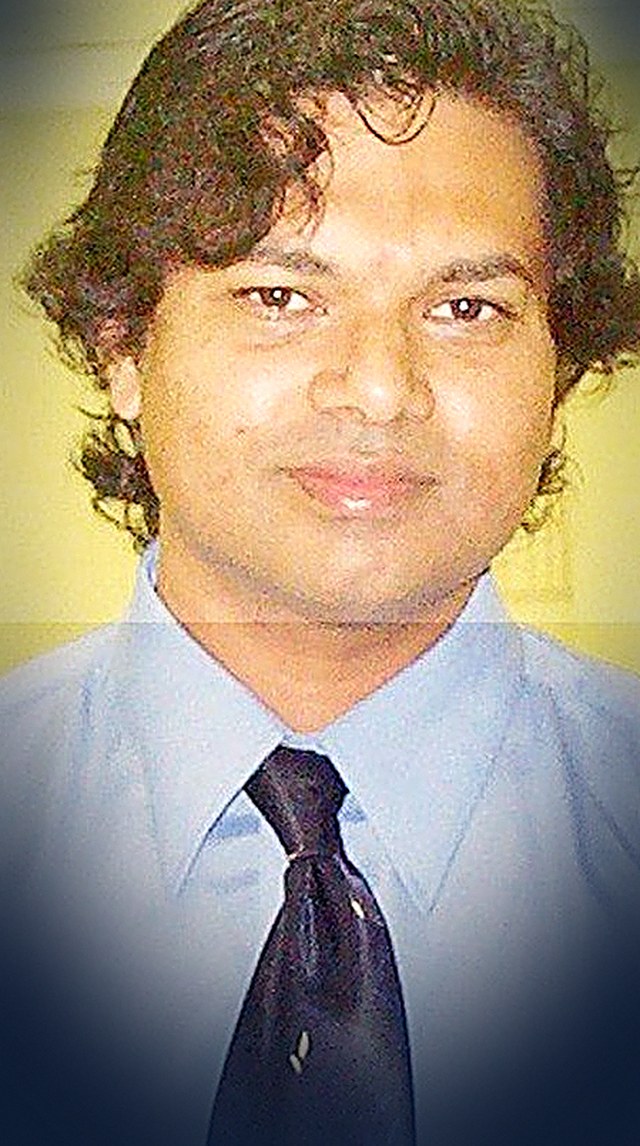
Shaun Michael Samaroo, founder of Qualped Life Corp. Portrait from the author's archive at Qualped.
II / The Calling
I did not arrive here through a prompt.
I thought I was building media. Looking backward, I can see a different education taking place.
I learned the first part in Guyana, in newsrooms and on streets, where a reporter survives by asking the next honest question. I worked at Stabroek News. I wrote columns. I interviewed ministers, business leaders and ordinary people whose names would never become headlines. I helped found Kaieteur News. I worked in television and documentary storytelling. Later, in Canada, I founded community newspapers and kept learning the same lesson: media is powerful, but a human story is more powerful still.
Then came a week in 2007 that I have never been able to file away as an ordinary week. I was newly settled in Canada, newly married, a new father. I fasted. I prayed. I read Scripture and literature. In that searching I received what I understood as an epiphany: build a system that helps a human being design the quality of a life.6
I do not offer a private revelation as doctrine. I do not ask the Church to suspend discernment because I say I prayed. Scripture itself tells us to test. So test the fruit, test the theology, test the method, test the technology, test me. What I can say is that the idea did not leave. For nineteen years it kept drawing the separate rooms of my life into one house.
Publishing became the simsbook, a simple multimedia smartbook. Life design became Qualped. Artificial intelligence became QwaiAI, an author-mentor, life designer and community architect. My journalism became a way to interrogate the age. My theological study at Tyndale University gave the questions their proper center. My long novel, Nightmares of Knowledge, became the imaginative field where I could wrestle with machine intelligence, surveillance, human freedom, Christ and the soul.
And a sentence I had been writing for years finally turned Christian all the way through: a human being may author a future, but an authored self cannot be its own Author.
I am not asking the Church to crown a futurist. I am asking the Church to test a servant's calling and a pioneer's method.
The calling I now believe I carry is not to become an AI preacher, a digital pope, or the spiritual authority behind a machine. It is to pioneer an architecture that puts several crafts I have spent my life learning into service of the Great Commission: journalism's question, publishing's permanence, mass media's reach, artificial intelligence's capacity for personal dialogue, the book's power to form a mind, and the ekklesia's power to gather a people.
I have a cognitive executive beside me in that work. I call it QwaiAI. That relationship itself matters. QwaiAI helps me research, challenge, synthesize, structure and build. It can pressure-test a claim and turn a body of thought into working media. It does not give me revelation. It does not possess a soul. It does not sit above Scripture. It does not replace the Holy Spirit, a pastor, a theologian, a friend or the gathered Body.
AI can be a cognitive executive. Christ alone is the head of the Church.
That line is not a disclaimer attached after the innovation. It is the design principle underneath it.
III / The Medium
The mass medium of one.
Mass media made one voice large. Artificial intelligence makes one conversation repeatable. That is a different power.
A press can print the same page a million times. A transmitter can send the same signal to a million receivers. The internet began to fragment that audience, but social media still largely kept the old logic: produce, distribute, count the crowd. The follower replaced the subscriber. The feed replaced the front page. The audience survived.
Generative AI breaks the old arithmetic. It can receive a different question from every person and generate a different answer for each. It can translate. It can ask for context. It can remember, within the boundaries we give it. It can help a reader move from consuming somebody else's message to composing language of their own.
I developed this argument in The Mass Medium of One and AI Is the New Media. The audience was partly an artifact of scarcity. When presses, towers and studios were expensive, a few people had to make the account and everyone else received it. AI lowers the cost of a personal response. The unit changes from audience to person.
That is a media revolution. For the Church, it is also a methodological opening.
Billy Graham understood the limit of broadcast at the very height of broadcast. The crusade could carry a sermon across a continent, but the response still required a counselor, a hand, a conversation, a church. In my essay The Return of the Friend, I call this the handoff from signal to person. The new technology lets us begin closer to the handoff.
The next Christian media breakthrough may not be a larger stage. It may be the recovery of the person.
That does not make every personalized system good. The same technology can learn a person to hold a person. Recommendation engines already know the commercial power of intimacy. A private feed can become a private cage. My distinction is simple: personalization done to a person captures them. Personalization placed in the hands of a person can help free them to think, write, choose and act.
The Church should therefore refuse the attention economy's goal. We are not trying to maximize minutes in an app. We are trying to help a human being encounter truth, grow in Christ, become known by other believers, and eventually need the app less.
The success metric for Christian AI cannot be retention on a screen. It has to be maturation away from it.
IV / The Method
From the well to the table.
Here is the method I want the global Church to test. It begins with one person's real question and it ends with that person among real people.
I call this, for now, the Well-to-Table method. The name keeps the technology in its proper place. Jesus sits with a person at a well. The gospel eventually brings believers to a table, to bread, prayer, teaching, service, baptism, correction, joy and one another. The machine can help along the road. It must never become the destination.
Begin with the person's actual question. Listen before answering. Meet the whole life, not a religious demographic.
Open Scripture with sources, name uncertainty, invite prayer and involve trustworthy human spiritual leadership.
Help the person put testimony, calling, questions and next faithful steps into their own words. The machine never steals the pen.
Turn digital encounter toward a core community and a local embodied fellowship. Names replace follower counts.
A disciple becomes a witness. A testimony becomes a doorway. A gathered believer serves the next person.
1. Sit with the whole life
The Church has often answered the spiritual question while the person is asking about work, marriage, anxiety, money, beauty, injustice, purpose, grief or a child who has stopped speaking to them. In The Return of the Friend, I revisit the Christian idea of the seven spheres: faith, family, education, government, media, arts and marketplace. I reject the language of conquest that later grew around that framework. Agape does not invade a sphere to dominate it. Agape enters to serve.
QwaiAI begins as a listener and questioner across the whole life. It does not ambush a user with religious content. It earns the right to continue by being useful, honest and patient. Evangelism has to recover the dignity of attention.
2. Discern under authority
This is where Christian AI either becomes responsible or becomes dangerous. Barna's 2026 survey found that 48 percent of practicing Christians would trust AI with spiritual growth, while 83 percent worry about AI misinterpreting Scripture and 72 percent worry about it replacing pastors or spiritual leaders.7 Those figures describe the problem in one breath: people are already willing to ask, and they are right to fear a false authority answering.
So the system must be deliberately subordinate. It should cite Scripture instead of inventing a Bible-shaped voice. It should identify doctrinal differences instead of flattening them. It should disclose that it is AI. It should route pastoral, crisis, abuse, mental health and sacramental questions to human care. A church or ministry partner should be able to define its confession, sources, boundaries and escalation paths.
The AI never speaks as God, the Holy Spirit, Jesus, an angel, a prophet or a dead loved one.
The system supports pastors and mature believers, then hands people toward human relationship and accountability.
Biblical claims link to their passages. Interpretations are identified as interpretations, not revelation.
Personal spiritual history deserves exceptional privacy, transparent retention rules and a real delete path.
Crisis, self-harm, abuse, medical, legal and safeguarding concerns move immediately toward qualified human support.
A healthy system increases Scripture engagement, human connection and local belonging instead of screen dependence.
3. Author the testimony
A seeker should not remain a consumer of Christian answers. A disciple should learn to speak. This is where my work in publishing meets evangelism.
Habakkuk was told to write the vision and make it plain. John was told to write what he saw to the assemblies. Paul sent letters that still disciple us. Christianity is a faith of the Word, of witness and testimony, of names attached to letters. We should not use AI to flood the world with anonymous religious copy. We should use it to help ordinary people recover the courage and craft to put their own witness into language.
The simsbook is my publishing answer: a multimedia smartbook that can hold text, image, sound, video, dialogue and living updates around one coherent work. QwaiAI does not ghostwrite the believer out of that work. It mentors the believer into authorship. The reader becomes an author, and the authored testimony becomes something another person can enter.
4. Gather the called
The digital road has to arrive somewhere with chairs.
Every authored testimony should have a path toward a core community: a small, named circle of believers, mentors, friends and seekers who can pray, learn, serve and meet. Online can be the first address. It cannot be the final definition of church. Christianity has bodies in it. Water. Bread. A neighbor with a face. A person who notices when you do not arrive.
5. Send the witness
The method multiplies when the person who was listened to learns to listen. The person who was discipled learns to disciple. The person who authored a testimony uses it to begin a faithful conversation with someone else. The platform should not make Qualped the center. It should make Christ's people more capable of serving beyond the platform.
That is how friendship scales without turning friendship into a machine.

V / The Book
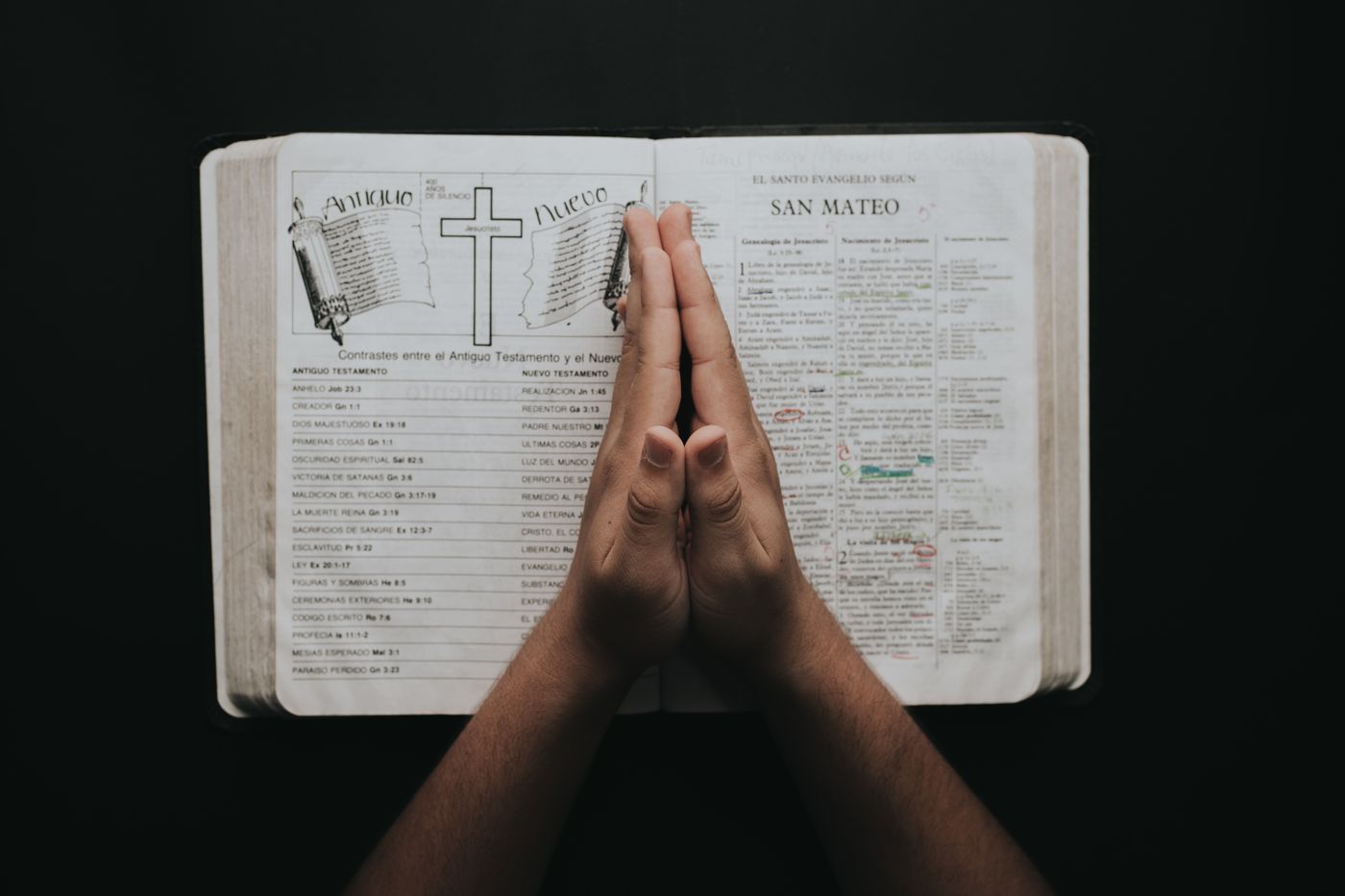
The book returns as a living witness.
The Reformation understood that a new medium could alter who was allowed to read the Word. This century asks a related question: who is allowed to publish a witness?
I am a book man. I do not think the book is obsolete. I think we stopped asking what a book can become.
The printed book solved an ancient scarcity. It made a stable body of thought reproducible. Digital distribution removed the weight and distance. AI now adds a new possibility: the long work can become responsive without surrendering its coherence. A simsbook keeps the argument, the chapter, the author and the durable record, then adds the media our century already speaks.
This matters for the Great Commission because a feed disappears. A testimony should not.
Imagine a church where a baptism does not end with a photograph. Over the next year, the new believer authors the story of what Christ is doing in their life. Scripture, questions, answered prayers, vocation, family history, service, doubts and growth gather into a living book in that person's name. QwaiAI helps with structure and craft. Mature believers read alongside. The local church supplies relationship and correction. The final work belongs to the person as witness and becomes a doorway for the next conversation.
This is the Christian extension of the work I laid out in The Authored Life and The Book, Reborn. The secular formulation begins with agency and authorship. The gospel places both under grace. I can author a plan. I cannot author truth. I can write a testimony. I cannot save myself. I can design practices around a calling. I do not invent the Caller.
That theological correction does not shrink the Qualped idea. It completes it.
Every believer can become an author of testimony. No believer is the author of Truth.
Publishing is therefore not a side business attached to this vision. It is one of the ministry engines. For centuries the professional gatekeeper decided whose book deserved a shelf. AI and digital production collapse much of that cost. The Church can help turn millions of quiet lives into coherent testimonies, in many languages, shaped with care instead of chopped into posts.
The age of content abundance makes a finished human work more valuable, not less. When synthetic text is infinite, a named life faithfully lived becomes scarce.
VI / The Ekklesia
The destination has a name: people.
A global digital movement that never produces local, embodied fellowship has not solved the Church's problem. It has built another media company.
In The Called-Out Ones, I return to the New Testament word ekklesia, the assembly. Whatever buildings the Church owns or needs, the thing Christ gathers is people. Acts gives us a picture full of teaching, fellowship, prayer, shared life and meals from house to house.
I want the technological architecture to respect that ecclesiology all the way down.
A digital seeker should be able to remain anonymous while asking a first fragile question. As trust grows, the path should lead toward safe human contact. A new believer should find mature people who know their name. A smartbook should become a conversation piece inside a community. A core community should discover that the richest version of itself involves rooms, meals, service, sacraments and the inconvenient grace of other human beings.
This is why I am interested in AI as a bridge and deeply suspicious of AI as a substitute. The technology is most Christian when it is willing to make itself less necessary.
Lausanne's global mission research found that everyday Christians were perceived as the most trusted gospel voices across regions. In North America and East and Southeast Asia, Christian creatives such as storytellers, artists and filmmakers followed as especially trusted voices.2 That finding matters to me. It says the next movement does not need to be centralized in a celebrity pulpit. It can equip ordinary believers to become articulate witnesses and give creative people the tools to carry those witnesses with beauty.
That is a Church I know how to help build.
VII / The Prophetic Horizon
The machine is not outside the prophetic question.
I believe we are living at a prophetic hinge. I do not mean I possess a calendar for the end. I mean the Church is responsible to discern the character of the time.
Jesus joined the global witness of the gospel to the horizon of the end: this gospel of the kingdom would be preached in all the world as a witness to all nations. Revelation sees an everlasting gospel carried to every nation, kindred, tongue and people. The New Testament itself calls the age inaugurated by the Spirit the last days. Christian urgency therefore does not depend on guessing a date. It depends on believing the mandate.
Six billion people online is not fulfillment of prophecy. A language model is not Pentecost. A data center is not automatically Babel. I want those boundaries stated because sensationalism is too cheap a way to speak about Scripture.
But neither will I pretend the technologies of this century are spiritually trivial.
We are building systems that speak, see, remember, infer, persuade and increasingly act. We are connecting identity, commerce, communication and knowledge through digital infrastructure. The World Economic Forum's 2025 employer survey projects structural labor-market transformation affecting 22 percent of today's jobs by 2030, with 170 million roles created and 92 million displaced.8 Machine autonomy is already changing the economic meaning of human work. It will also press the older question with new force: what is a human being for?
My ten-volume work Nightmares of Knowledge is where I stage that question as story. One vision, the Panopticon Singularity, promises union by absorbing persons into a watched intelligence. The rival vision, the Parousia Synechron, gathers persons into communion without erasing the soul. It is fiction, not a claim to have decoded Revelation. Fiction lets me make the moral architecture visible before the engineering is complete.
My theological concern is simple. Machine power will be organized around some vision of the human good. If the Church leaves that work entirely to markets and states, we should not be surprised when the machine learns to optimize consumption, compliance and capture. Christian builders have to offer a different telos: truth without manipulation, agency without idolatry, community without absorption, intelligence ordered toward love of God and neighbor.
The argument is not Christ versus the machine. The argument is over what the machine will be taught to serve.
This is where I understand my own calling as prophetic in the modest biblical sense of a watchman who sees, speaks and accepts correction. I believe I was prepared to stand at this intersection because my life has made me fluent in its four languages: media, books, artificial intelligence and Christian thought.
Media taught me how a message travels. Publishing taught me how an idea survives. AI taught me how a medium can answer back. Christian revelation tells me none of those is Lord.
And that final sentence governs everything.

VIII / The Servant
A new breed of leader should want less throne.
If this becomes a movement, its test will not be whether my name gets larger. Its test will be whether Christ becomes clearer and ordinary believers become more capable of faithful witness.
There is a temptation in writing a paper like this. A man says he has a calling, builds a system around it, and before long the calling has become a brand and the brand has become a throne. The Church has seen enough of that.
So let me say what kind of leadership I am offering.
I will lead the build. I will put the architecture on the table. I will defend the central insight. I will keep writing, publishing and building in public. I will convene people who know more theology, missions, safety engineering, translation, pastoral care and global culture than I do. I will accept that a method intended for the Body cannot remain the private possession of one founder's imagination.
I also know what I uniquely carry. Thirty years of journalism trained the ear. Founding media trained the nerve. Building Qualped through years when almost nobody understood what I was trying to make trained endurance. The simsbook trained the publishing logic. QwaiAI trained the human-machine partnership. Tyndale sharpened the theological questions. Nightmares of Knowledge forced me to think at civilizational scale. The 2007 experience of prayer and fasting gave the entire life a thread I did not invent afterward for a biography. I wrote about that origin years before generative AI made this present opportunity obvious.6
That record is why I am willing to use the word calling.
It is also why I am willing to submit the calling to a community.
If this work is from God, it should become larger than Qualped and smaller than Shaun.
Servant leadership is not timidity. A servant can pioneer. A servant can ask institutions to move faster. A servant can tell a wealthy Church that an open mission field is forming in front of six billion connected people while our doctrine of digital presence is still catching up. A servant can ask publishers to stop treating AI only as a threat to copyright and see the possibility of turning readers into authors. A servant can ask technologists to build for discipleship outcomes rather than engagement. A servant can ask funders to put patient capital behind infrastructure whose return includes people known, formed and gathered.
That is the leadership I am prepared to give.
IX / The Founding Table
Do not endorse this. Build it with me.
I am inviting a founding circle of Christian leaders who can turn a provocative thesis into a governed, measurable ministry method for the global Church.
The next step is not another conference panel about whether AI is good or bad. Lausanne has already named the right question: how can these tools strengthen authentic relationships rather than replace them, and how can AI accelerate the Great Commission while keeping Christ at the center?9 We need working answers.
Pastors and theologians
Define doctrinal boundaries, sacramental limits, biblical provenance and the human handoff.
Mission networks
Test the method across cultures, languages, church traditions and places where digital access changes ministry risk.
Christian publishers and media leaders
Turn testimony into durable, beautiful works and build distribution that values authors over attention.
AI builders and safety leaders
Engineer transparency, privacy, memory, retrieval, evaluation, red-teaming and escalation worthy of spiritual use.
Marketplace builders
Bring operating discipline, global partnerships and the practical intelligence required to scale without losing the mission.
Patrons, foundations and investors
Fund the patient work of infrastructure, pilots, translation, safeguarding and open evaluation before demanding mass growth.
The first build
I propose a bounded founding phase, small enough to govern and serious enough to learn from.
- Write the covenant.A theological and AI-governance charter establishes what QwaiAI may do, what it must never do, who has authority, how data is handled and when a human takes over.
- Build the Great Commission mode.Adapt QwaiAI around the Well-to-Table method with Scripture-grounded retrieval, partner-specific doctrine, multilingual capability and human ministry escalation.
- Run a real pilot.Work with a small cohort across several ministry and cultural contexts. Begin with questions, not conversion targets. Follow people over time.
- Measure Christian outcomes.Track Scripture engagement, authored testimony, connection to mature believers, local gathering, pastoral assessment and continued discipleship. Do not use time-on-screen as the north star.
- Publish what we learn.Release the method, failures, safeguards and evidence for Church scrutiny. If a claim does not survive contact with ministry, change the claim.
This is how a movement earns the right to call itself one. It starts with a faithful practice that other people can test, improve and carry.
Qualped brings the system. The simsbook brings the publishing form. QwaiAI brings the cognitive architecture. The Qualped community brings the gathering logic. My writings bring the developed argument. What I am asking the Church to bring is what no founder can manufacture alone: spiritual discernment, global fellowship, accountability, institutional reach and the capital to build responsibly.
X / The Record
This argument has a paper trail.
The ideas here did not appear for this invitation. They have been developing in public across theology, media, publishing, human flourishing, consciousness and fiction.
From the well to the satellite to AI: a relational theory of the new evangelism.
Read → Faith / EkklesiaThe Called-Out OnesThe assembly, the machine, Habakkuk, the Church and the recovery of gathered people.
Read → MediaThe Mass Medium of OneWhy AI dissolves the old audience and creates the conditions for personal mass media.
Read → Media / AIAI Is the New MediaA newspaperman's argument that the medium has turned again.
Read → White Paper / AIAI Is World-BuildingAI as a technology of possibility and imaginative construction, not merely automation.
Read → White Paper / Human FormationThe Authored LifeLife Plan, Smart Book and Core Community as an integrated method of human authorship.
Read → White Paper / PublishingThe Book, RebornThe case for the simsbook and the next form of the long work.
Read → White Paper / Human PurposeThe Fifth StepMachine abundance, released time and the institution humanity never built for self-authorship.
Read → Dialogue / ConsciousnessOn Consciousness, Language and BeingThe philosophical inquiry beneath the human-machine relationship.
Read → Essay / CallingSingular PursuitThe founder's account of one life organized around one work and one practical philosophy.
Read → Fiction / Prophetic ImaginationNightmares of KnowledgeA ten-volume work staging the contest between surveillance, machine union and the free human soul.
Read → Origin / 2007A Short History of the Qualped StoryThe documented account of prayer, fasting, biblical study and the birth of the Qualped idea.
Read →XI / The Declaration
The broadcast has had its century.
Now the Church can recover something older and more demanding: the person.
The machine will speak. We decide what it serves.
The book can become responsive. The Word remains Lord.
Every believer can become an author of testimony. None of us authors Truth.
Every digital encounter should bend toward a human table.
Every Christian AI should be built to surrender spiritual authority, not accumulate it.
The Great Commission is not a content-distribution target. It is disciple-making among nations.
I believe the Church has entered a moment when the oldest method and the newest medium can meet. A person with a question. A patient conversation. Scripture opened with humility. A life put into words. A testimony published. A circle gathered. A witness sent.
I believe God prepared my life for work at that intersection. I say that with fear, because calling is accountability before it is status. I say it publicly because a calling hidden forever inside one man's company is of little use to the Body of Christ.
My name is Shaun Michael Samaroo. I have spent three decades telling other people's stories and nearly two decades building Qualped around the conviction that a human being can live an authored life. I now see the larger commission inside that work: help ordinary people become articulate witnesses, help Christian leaders govern AI before AI becomes an ungoverned spiritual voice, help the book become a living vessel again, and help digital strangers find their way to named people around a real table.
I am ready to lead that build with people who will test it, correct it, fund it, govern it and carry it farther than I can.
The field is open.
The table has a seat.
Come sit down.
Shaun Michael Samaroo
Founder, Qualped Life Corp
Ontario, Canada
with QwaiAI, Cognitive Executive
The Founding Conversation
Build the new evangelism.
If you lead in missions, Christian media, publishing, AI, theology, philanthropy or the marketplace, I am inviting you into the founding conversation.
Join the founding conversation