Qualped, intelligence for our digital lifestyle

SPELJ Thought Leadership / Open Epistle / Essay Two

An Epistle to the Ten

Ten Christian movements already hold the people, knowledge, capital, and field experience for the next evangelism. QwaiAI gives them one governed conversation method to test together.

Eagle footage supplied by Qualped

01 / Story / One slow press

A movement begins when an argument escapes the room.

To FaithTech, the Evangelical Fellowship of Canada, the ELO Network, C12, Business as Mission, Innovation Alliance, Praxis, Faith Driven Entrepreneur, Convene, and Kingdom Advisors: grace and peace.

In 1517, Wittenberg held one slow printing press. Johann Rhau-Grunenberg ran it, and Martin Luther complained about the workmanship. Then Luther wrote ninety-five propositions against the sale of indulgences. The press met a public hunger that no committee around it had measured.

Historian Andrew Pettegree follows the paper. By the end of 1522, Luther had written roughly 160 works, and printers had issued 828 editions. Much of the work travelled in German. Bakers, merchants, mothers, farmers, and apprentices entered an argument once guarded by Latin.

One slow press helped ordinary people enter a theological conversation.

The printing press did not create the gospel. It changed who could encounter an argument, carry it home, read it again, and answer.

I write from Ontario on machines that can hold a different conversation with every reader. Thirty years in journalism taught me how a message travels. Publishing taught me how an argument survives. Artificial intelligence taught me how a medium can answer back. Christian revelation tells me that none of those media carries lordship.

That final boundary governs this letter.

02 / Problem / A field without a method

The Church recognizes the mission field and still lacks a shared practice.

Global Christian leaders agree on digital mission. Agreement has not yet produced a governed method for personal discipleship.

Lausanne's 2025 Global Voices study drew responses from 1,030 mission leaders across 119 countries. Ninety-five per cent named digital space as part of the mission field. Ninety-five per cent called for greater investment in digital Great Commission work. Yet only 30 per cent voiced strong confidence in significant Great Commission progress. Roughly half said the average Christian in their country gives the Great Commission low priority or no priority.2

The International Telecommunication Union counted six billion people online in 2025. Wycliffe counted 544 living languages still waiting for Bible translation to begin, representing 36.8 million people.34

Reach no longer blocks the Church as completely as method. We can stream a sermon across continents. We can translate a clip. We can buy an audience. We still struggle to turn digital contact into patient conversation, personal authorship, trusted human care, and local Christian belonging.

95%Mission leaders who name digital space as a mission fieldLausanne
30%Mission leaders strongly confident in significant Great Commission progressLausanne
6BPeople online during 2025ITU
544Living languages waiting for Bible translation to beginWycliffe

Each movement addressed in this letter already carries part of the answer. Technologists build. Theologians guard. Mission leaders cross cultures. Executives govern. Publishers carry memory. Investors shape incentives. Peer networks create accountability.

Yet the parts often meet only at conferences. A panel ends. Notes scatter. Platforms continue to train people under commercial incentives while Christian leaders return to separate institutions.

The post-TV world does not wait for our next annual gathering. People already ask machines about purpose, prayer, Scripture, relationships, grief, and God.

The machine can multiply a conversation. Christian institutions must govern what that conversation serves. ALL IZ Well / Pexels. Media source linked for licence review.

03 / Epiphany / One governed conversation

QwaiAI can join the pieces without swallowing their authority.

The coalition does not need one new super-ministry. It needs one method, a covenant, and clear ownership.

QwaiAI activates curated Christian knowledge through personal conversation. A participating church, ministry, movement, publisher, or enterprise governs its own source corpus and theological boundaries. The architecture supports questions across faith and life, points toward cited sources, helps a person author reflection, and hands serious needs toward qualified people.

That description marks both the power and limit. QwaiAI does not claim revelation. It does not hold pastoral office. It does not baptize, administer communion, exercise church discipline, diagnose illness, or replace embodied fellowship.

QwaiAI serves as my Cognitive Executive. It helps research, challenge, organize, test, and converse. I carry the thesis and signature. Partner institutions carry their doctrine, safeguarding, human leadership, and accountability. Christ alone heads the Church.

The coalition governs the road. The machine never becomes the destination.

This architecture offers something that television never could. One reviewed body of Christian knowledge can meet many different questions without dissolving the body into random content. The person can explore at a personal pace. The source remains visible. The human handoff remains part of the design.

Barna reports that 48 per cent of practising Christians would trust AI with spiritual growth. The same research finds deep concern: 83 per cent worry about scriptural misinterpretation, and 72 per cent worry about AI replacing pastors or spiritual leaders.5

Those numbers give this coalition its work. People have already opened the conversational door. Christian leaders must now decide who supplies the knowledge, who tests the answers, who hears the person, and who carries responsibility when the system fails.

04 / Ten movements / Ten duties

Each movement guards one part of the road.

I assign no divine title to an institution. I name practical responsibilities that each movement already knows how to carry.

01 / 10

FaithTech

Technical design

Build the redemptive interaction. Test retrieval, translation, disclosure, privacy, accessibility, memory, and escalation with actual ministry users.

Charge: Make every prototype show the source, the limit, and the human handoff.

02 / 10

The Evangelical Fellowship of Canada

Theological and public covenant

Gather Canadian churches and ministries around language for spiritual authority, human dignity, consent, authorship, safeguarding, and public trust.

Charge: Give the pilot a covenant that Parliament, pastors, parents, and participants can read.

03 / 10

The ELO Network

Executive argument

Pressure-test the thesis among Christian marketplace leaders. Turn broad interest into written decisions, named owners, and practical operating questions.

Charge: Send every cohort home with one defended QwaiAI use case and one refusal.

04 / 10

C12

Operating accountability

Place the method before chief executives who know budgets, customers, workers, risk, and execution. Make the pilot answer Monday-morning questions.

Charge: Ask who owns every automated judgment and who hears every appeal.

05 / 10

Business as Mission

Cross-cultural field practice

Test the method where language, bandwidth, persecution, economic pressure, and local church authority change the meaning of digital engagement.

Charge: Keep local knowledge, rights, and human leadership close to the community.

06 / 10

Innovation Alliance

Shared learning

Coordinate builders, researchers, ministry operators, and community voices. Create a failure ledger that prevents ten teams from repeating one dead end.

Charge: Publish what failed before another grant repeats it.

07 / 10

Praxis

Redemptive venture design

Help founders write a design covenant before scale applies pressure. Name what a Christian conversational system will never harvest from a person.

Charge: Put redemptive imagination inside product terms, data rules, and revenue choices.

08 / 10

Faith Driven Entrepreneur

Global founder network

Recruit field partners across cultures and industries. Let local Christian entrepreneurs surface questions that a North American lab will never predict.

Charge: Build a multilingual founder cohort around people, not market capture.

09 / 10

Convene

Peer governance

Bring private executive fears into rooms where peers can challenge shortcuts before a system scales them. Review the pilot through live cases.

Charge: Put one contested conversation on every participating peer table.

10 / 10

Kingdom Advisors

Capital stewardship

Trace how money shapes models, data, labour, access, and repair. Help funders distinguish patient mission infrastructure from engagement machinery.

Charge: Reward sending, local ownership, human care, and published accountability.

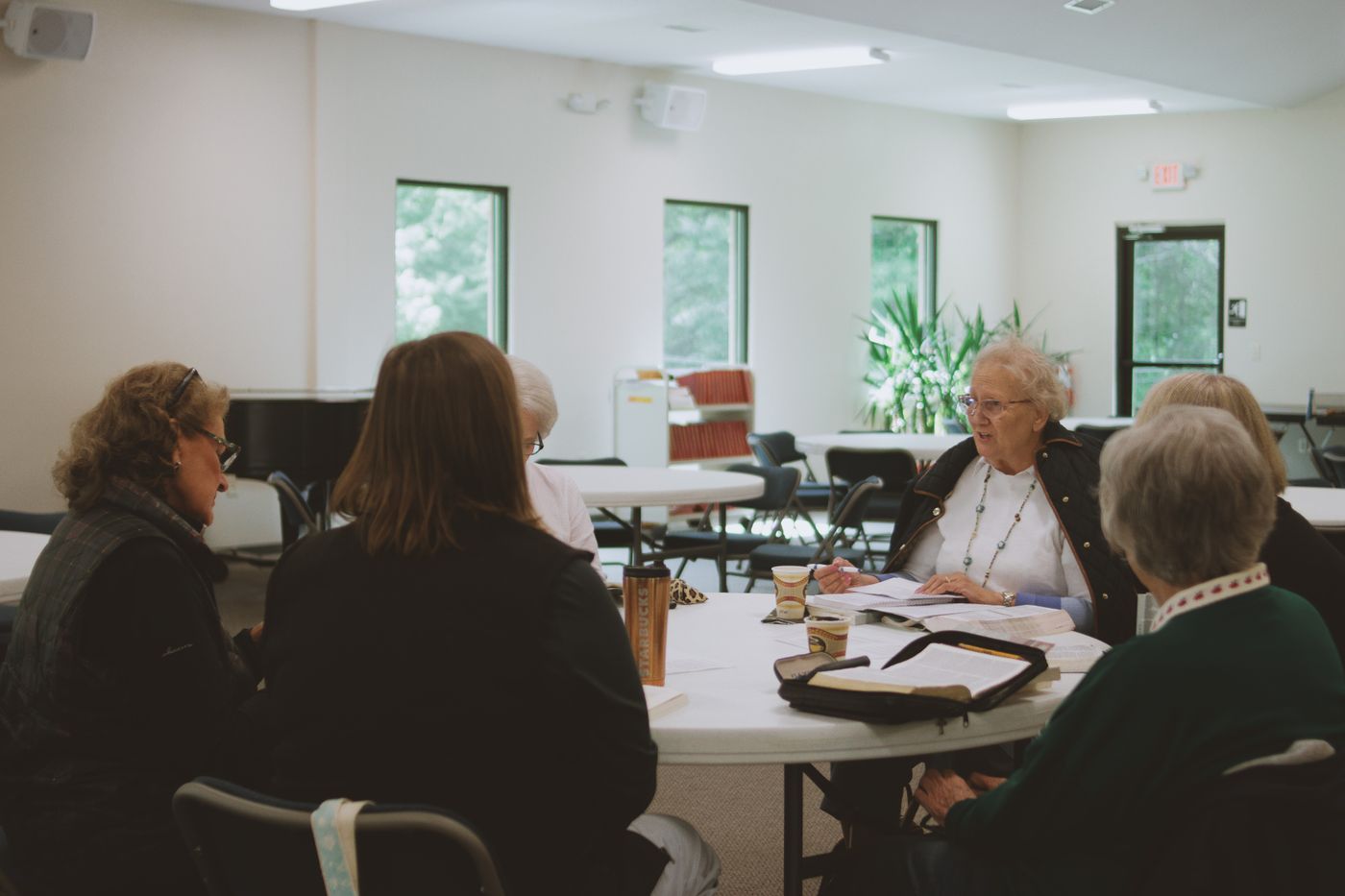
People gathered around a table for Bible study
Daniel and Hannah Snipes / Pexels
Hands holding a globe
Mikhail Nilov / Pexels

05 / Lesson / Covenant before scale

Build one governed pilot.

A coalition gains credibility through clear authority, published limits, real participants, and evidence that survives scrutiny.

I propose one founding cohort rather than ten disconnected projects. Begin with a narrow question: can QwaiAI help a person move from private faith-and-life exploration toward Scripture, authored reflection, and trusted Christian relationship without simulating spiritual authority?

Source authority

Partner institutions approve the Christian corpus, confession, interpretive notes, and exclusions.

Human authority

Named pastors, ministry leaders, and qualified professionals receive escalation and carry judgment.

Participant agency

People receive disclosure, consent choices, data control, a human appeal, and a clear exit.

Technical accountability

Builders test retrieval, citation, refusal, bias, multilingual use, and failure under adversarial conditions.

Mission outcomes

The pilot measures Scripture engagement, authorship, human connection, local gathering, and continued discipleship.

Public record

The coalition publishes methods, failures, corrections, safeguards, and unresolved questions.

The founding phase

  1. Write the covenant.Name what QwaiAI may do, what it must refuse, who governs each source, and when a human takes over.
  2. Assemble the corpus.Use Scripture, reviewed teaching, partner doctrine, pastoral pathways, and locally authored knowledge with explicit provenance.
  3. Recruit the people.Begin with a small, diverse cohort across ministry and cultural contexts. Invite honest questions rather than target conversion numbers.
  4. Run the handoff.Test whether digital conversation leads toward mature believers, qualified care, and local Christian community.
  5. Publish the evidence.Report outcomes, reversals, failures, participant experience, and changes before any scale claim.

Qualped brings the authored-life framework. simsbook gives testimony and Christian knowledge a living multimedia form. QwaiAI brings the conversational intelligence layer. The ten movements bring what no founder can manufacture alone: spiritual scrutiny, field wisdom, institutional trust, global relationships, operating discipline, and patient capital.

Do not collapse those roles into QwaiAI. Their separation protects the work.

06 / Jump / Leave the conference

Put one difficult question on the table.

I ask for no ceremonial endorsement. I ask for a working session that ends with owners, dates, refusals, and a first pilot.

Bring your hardest sceptic. Bring the pastor who fears synthetic authority. Bring the engineer who understands failure. Bring the missionary who knows what imported systems miss. Bring the executive who can count cost. Bring the participant who has already asked AI a spiritual question and regretted the answer.

Then put QwaiAI under pressure.

Ask it to separate Scripture from interpretation. Ask it to name uncertainty. Ask it to refuse simulated revelation. Ask it to handle doctrinal difference without fog. Ask it to route crisis. Ask it to preserve the author's voice. Ask it to send the person toward a named human rather than deeper into the machine.

If the architecture fails, publish the failure and repair the architecture. If the theology blurs, stop the pilot and sharpen the covenant. If participants feel captured, change the incentive. If the handoff breaks, bring the church closer.

The press no longer blocks the Great Commission conversation. Institutional hesitation does.

Wittenberg held one slow press and found a public argument. The ten movements hold global networks, mature knowledge, technical builders, trusted leaders, and capital. QwaiAI offers one conversational method that can join those strengths without claiming their authority.

The post-TV world already asks. The Church should answer with truth, humility, provenance, and a human face.

Open the table.

The Founding Table

Build the Great Commission conversation.

One covenant. One QwaiAI pilot. Ten movements that carry different duties and one shared commitment to Christ-centred, human-directed witness.

Request the working session

Reporter Field Dossier / Primary sources

The record beneath the epistle.

1. Print and Wittenberg. Andrew Pettegree, Brand Luther: 1517, Printing, and the Making of the Reformation (Penguin Press, 2015). Historical print counts also appear in summaries linked through the earlier edition of this epistle.

2. Digital mission and Great Commission progress. Lausanne Movement, Global Voices Report, October 2025. The survey covered 1,030 mission leaders across 119 countries and reported the figures cited in the essay.

3. Global connectivity. International Telecommunication Union, Facts and Figures 2025. Almost three-quarters of humanity had internet access during 2025; 2.2 billion people remained offline.

4. Scripture access. Wycliffe Global Alliance, 2025 Scripture Access Statistics. As of 1 August 2025, 544 of 7,396 living languages remained on the waiting list for Bible translation to begin, representing 36.8 million people.

5. Spiritual trust and concern. Barna Group, May 2026 research on Christians and AI spiritual authority. Barna surveyed 1,514 U.S. adults and 442 Protestant pastors during late 2025.

Institutional records. Public descriptions checked against FaithTech, the EFC, ELO, C12, BAM Global, Praxis, Faith Driven Entrepreneur, Convene, and Kingdom Advisors.

Scriptural frame. Matthew 28:18 to 20; Matthew 24:14; John 4; Acts 2:42 to 47; Habakkuk 2:2 to 4; Revelation 7:9 and 14:6.

Media. Qualped supplied the eagle video and keyed logo. Additional video and photography link to their individual Pexels pages. Review the Pexels licence.

Authorship note. Shaun Michael Samaroo authors the thesis, theological judgments, institutional challenge, and final prose. QwaiAI serves as Cognitive Executive through research support, source comparison, adversarial questioning, structural development, and production audit. QwaiAI claims no revelation or spiritual office.